Spanish for travel: the 150 words you'll actually use
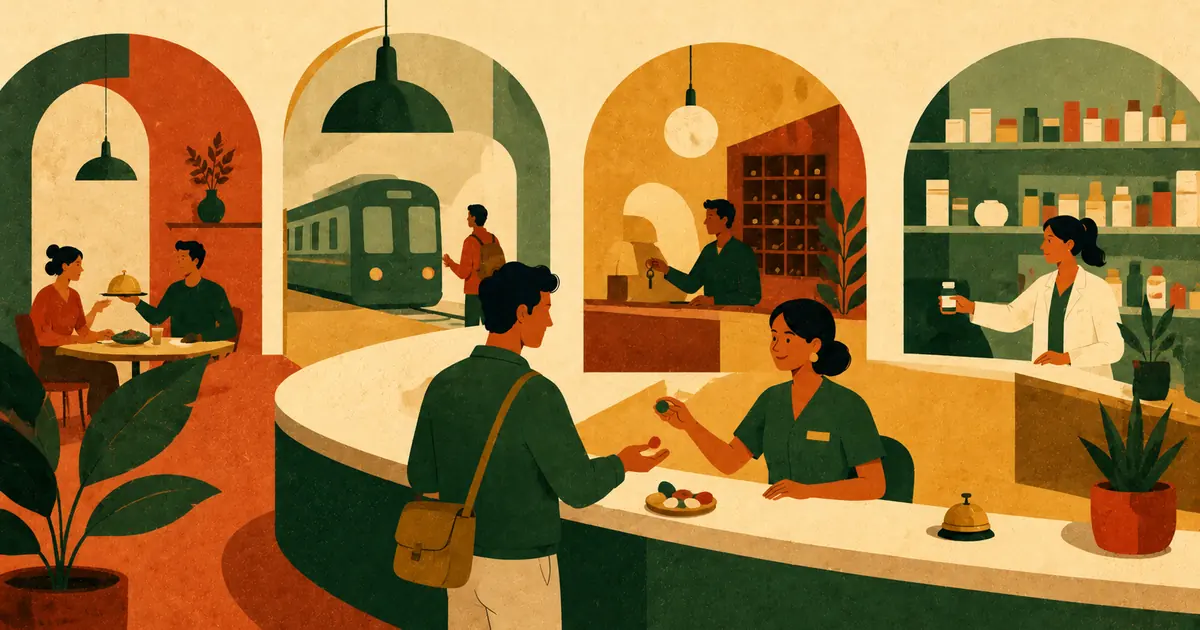
You do not need fluent Spanish to travel well. You need about 150 words, chosen ruthlessly. Waiters, ticket clerks and pharmacists have the same conversations with travellers every day, so the vocabulary of those conversations is small, predictable and learnable before you fly.
Politeness first, and it changes everything
Hola, buenos días, por favor, gracias, de nada, perdón, disculpe, sí, no, ¿habla inglés?, no entiendo, ¿puede repetir?, adiós.
These fifteen words carry more weight than any other group. Locals forgive every grammar mistake that arrives wrapped in a por favor.
The restaurant
The menu: desayuno, comida, cena, agua, vino, cerveza, café, pan, carne, pollo, pescado, verduras, postre. The logistics: una mesa para dos, la carta, la cuenta, propina, ¿qué me recomienda? And the ones that matter medically: soy alérgico a…, sin gluten, vegetariano.
Getting around
¿Dónde está…?, la estación, el aeropuerto, el tren, el autobús, el metro, ida y vuelta, izquierda, derecha, todo recto, cerca, lejos, la calle, la plaza, ¿a qué hora sale?, llegada, salida, un taxi.
One regional note: a ticket is un billete in Spain and un boleto across most of Latin America. Both are understood either side, but hearing the local one matters more than saying it.
Sleeping, shopping, and the numbers behind both
Hotel: una reserva, una habitación, la llave, desayuno incluido, aire acondicionado. Shops: ¿cuánto cuesta?, caro, barato, la talla, efectivo, tarjeta, el recibo, abierto, cerrado, el mercado. Then numbers 1 to 20 plus treinta, cuarenta, cincuenta, cien, and hoy, mañana, ayer, ahora, más tarde, el dinero, el cambio. Prices and schedules run through this small set, which is why it repays practice more than any other.
Emergencies
Ayuda, la farmacia, el médico, el hospital, la policía, me duele…, la cabeza, el estómago, fiebre, enfermo, perdido, he perdido mi pasaporte, el seguro, urgencias. You will probably never need them, which is exactly why they have to be automatic rather than looked up in a panic.
Learning 150 words in 30 days
- Five words a day covers the whole list in a month at five minutes a session.
- Learn with audio. Spanish pronunciation is regular, but only once you have heard it: the ll in llave, the rolled r in perro.
- Practise the answers too. Asking ¿dónde está la estación? is useless if a la derecha means nothing coming back. Learn directions as pairs.
- Let the schedule handle the rest. Words learned in week one need refreshing before departure, and spaced reviews place that automatically.
Spanish Progress organises its 6,000 words in themed modules, travel and food included, with audio on every card. Start the travel module a month before departure and land already speaking the 150 words that matter.
Which Spanish verbs carry a whole trip?
Nouns are what people study and verbs are what they need. A traveller with fifty nouns and no verbs points at things. A traveller with fifteen verbs handles almost everything, because the same verb reappears in every situation.
- Querer for what you want. Quiero un café.
- Poder for permission and possibility. ¿Puedo pagar con tarjeta?
- Haber in the form hay, for what exists. ¿Hay wifi?
- Necesitar when querer would sound too casual.
- Saber for information. ¿Sabe dónde está la estación?
- Estar for location. ¿Dónde está el baño?
Learn these six in the yo and usted forms and you can build a request out of almost any noun you know. That is a better return than any themed list of the same size.
How do you understand the answer?
Most travel phrasebooks prepare you to ask and leave you stranded when someone replies. The reply comes fast, in a regional accent, and often contains none of the words you rehearsed.
Two habits fix this. Learn the ten most common answers rather than only the questions: a la derecha, a la izquierda, todo recto, al final de la calle, está cerrado, no queda, enseguida, ahora mismo. And learn one repair phrase properly: ¿Puede repetir más despacio, por favor? A traveller who can ask for a repeat converts every failed exchange into a second chance.
What to revise two weeks before you go?
Switch the direction of your review. Recognition is useless at a counter; you need the word to arrive when you open your mouth. Review from English to Spanish, out loud, and time yourself. Anything slower than two seconds will not be available in a real conversation.
Prioritise by what you will actually do. A week of city walking needs directions, transport and restaurants. A beach holiday needs almost none of that and needs pharmacy vocabulary instead. Forty words chosen from your own itinerary beat four hundred generic ones.
Numbers are where trips go wrong
Prices, platforms, room numbers and times all arrive as numbers, spoken fast. Someone with solid travel vocabulary can still lose a transaction because cuarenta and cincuenta sound alike at speed, or because they are still converting doscientos in their head when the queue moves on.
Drill them out loud rather than reading them. Say prices, times and phone numbers until they arrive without translation. The twenty-four hour clock is worth ten minutes on its own: las quince treinta is half past three, and timetables across Spain and Latin America use it.
Land already speaking the words that matter. Start the travel module today.